
What can kids learn about money at each age?
The Consumer Financial Protection Bureau (CFPB), a U.S. government agency, lists money lessons for each stage in its Money as You Grow guide for parents.
- Ages 3 to 5: Kids can learn that money comes from work, and that sometimes they need to wait and save for what they want.
- Ages 6 to 12: Kids can earn money through an allowance or by doing jobs, and start a habit of setting money aside.
- Teens: Kids start making money decisions on their own, such as comparing prices before buying and following through on a goal.
The ages are the CFPB's general stages. Every child is different, so use them as a starting point rather than a rule.
Regular allowance or paid chores?

For kids ages 6 to 12, the CFPB mentions two ways to earn money: an allowance or doing jobs.
A regular allowance on a set day lets kids practice planning until the next payday.
Paying for extra jobs connects money with work.
You can also combine the two: a small regular allowance, plus pay for jobs beyond everyday chores.
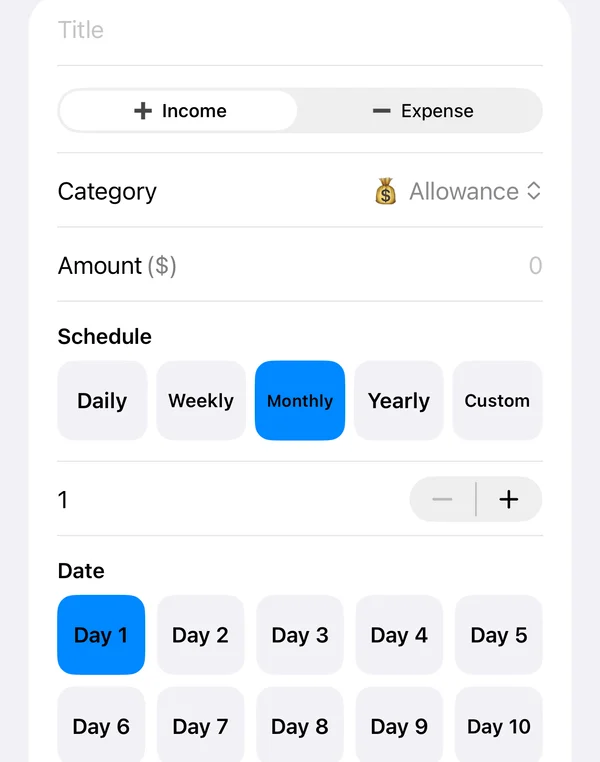
Three steps to set up an allowance together
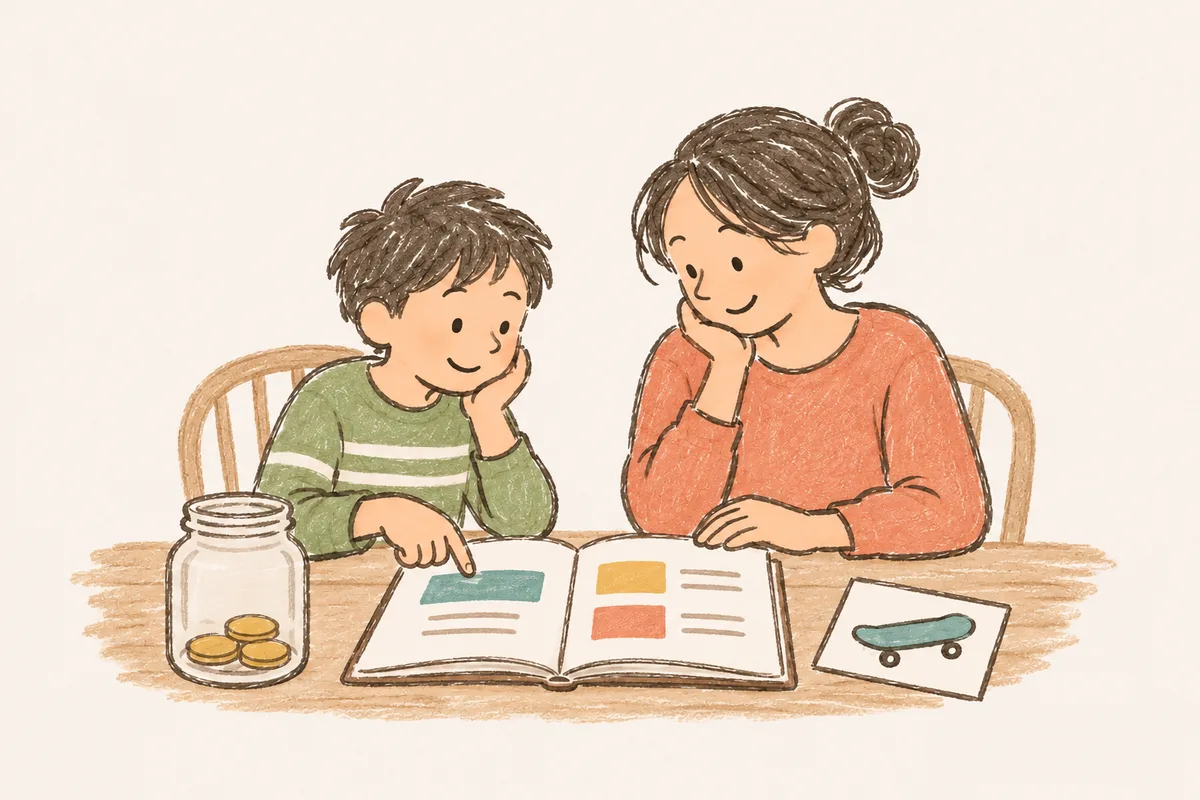
1. Decide the amount and the payday
There's no single right amount.
It depends on what you expect the allowance to cover.
Pick a day to review the amount together, such as the start of a new school year.
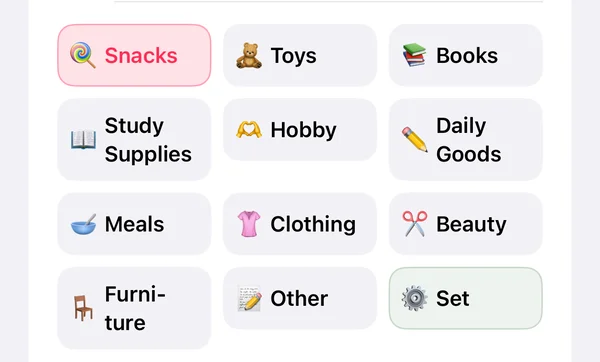
2. Decide what the allowance pays for
Will snacks, toys, or school supplies come out of the allowance, or from the family budget?
Agreeing on this first avoids arguments later.
3. Save toward a goal and look back together
The CFPB suggests building a habit of putting money aside for things you want.
Pick something your child wants, set a target amount, and check the progress together once a month.
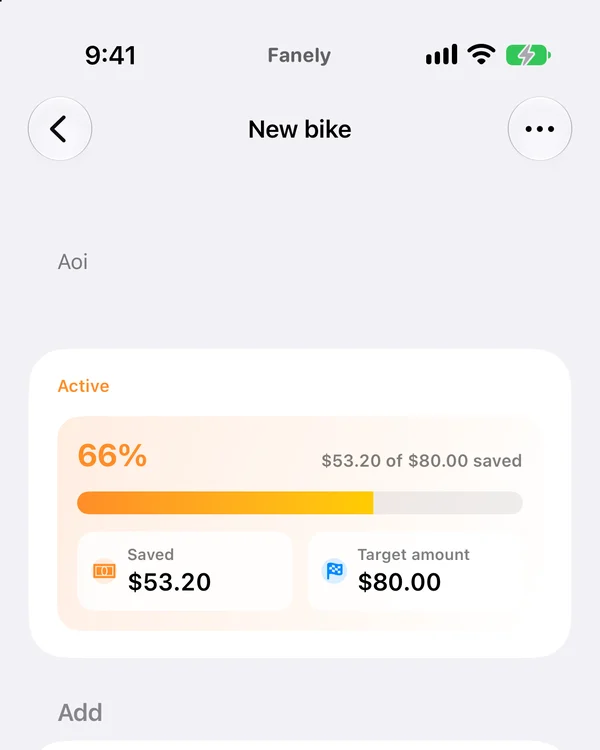
Track allowance and savings together with Fanely
Fanely is an app for stamp cards, chores, and allowance.
Parents and kids can see each child's balance and history in the same app.
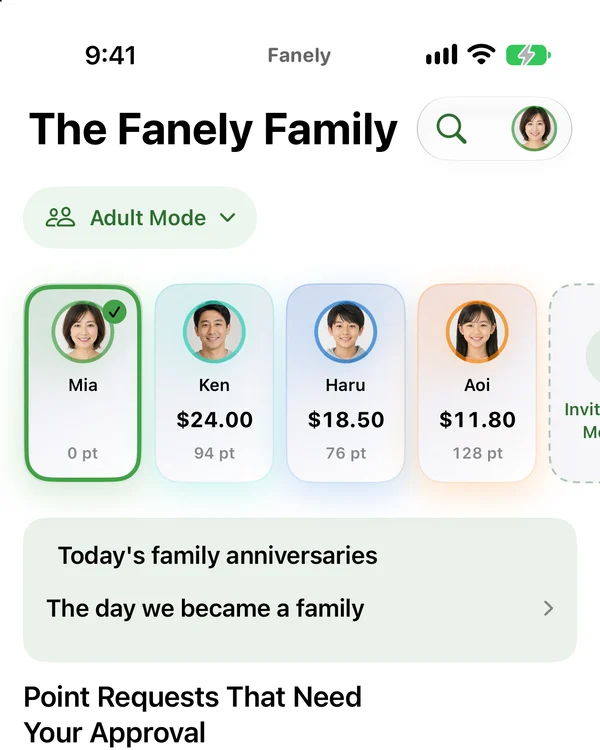
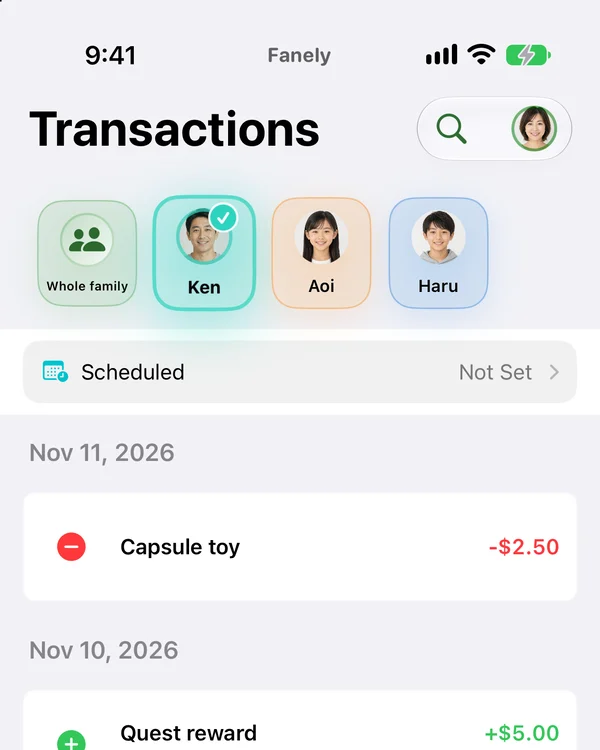
Screens show fictional demo data.
To learn how to record allowance, see Allowance help.
For everything else Fanely can do, see the features page.
Sources
- Money as You Grow (Consumer Financial Protection Bureau, Last modified June 26, 2026)
- Money as You Grow: School-age children to preteens (Consumer Financial Protection Bureau, Last modified June 26, 2026)